

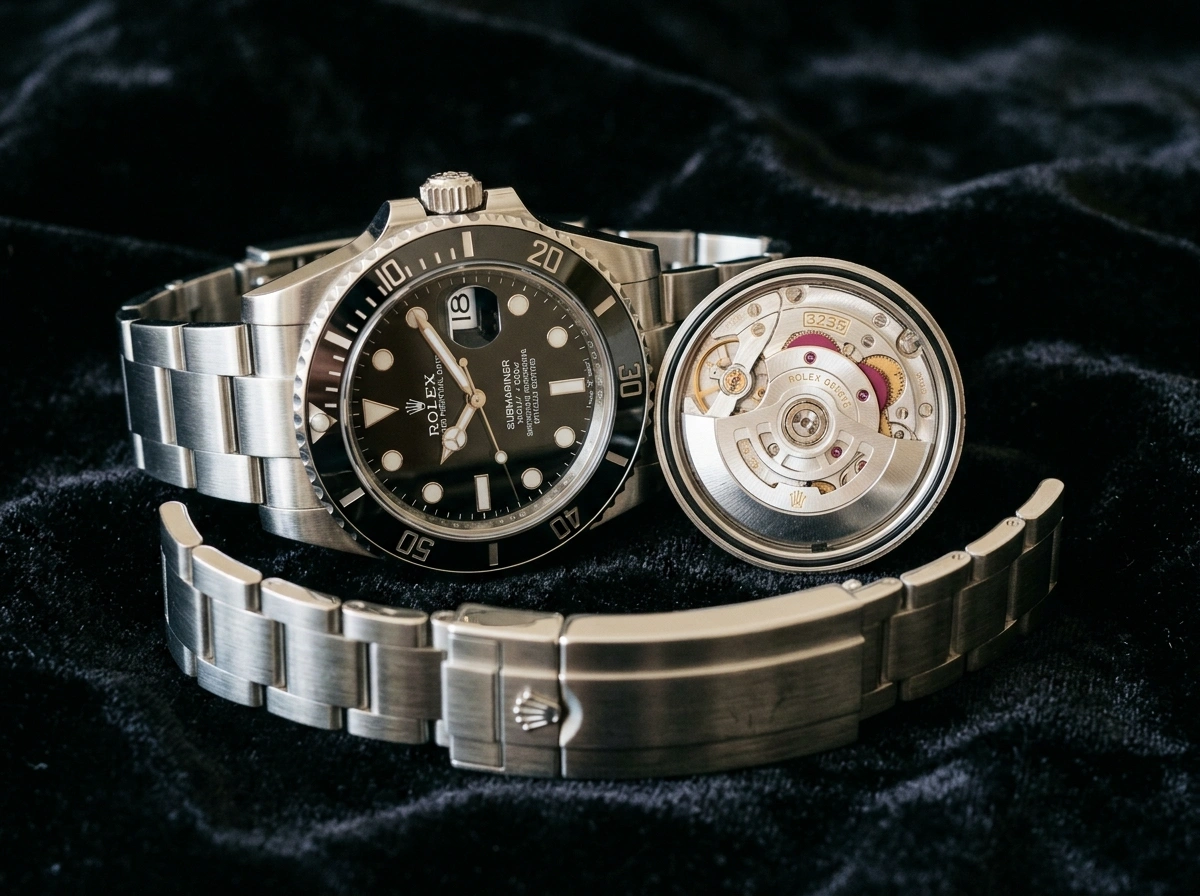
High-end replica watches occupy a specific corner of the timepiece world. They attract collectors, enthusiasts, and curious shoppers who want to understand how closely a copy can mirror an original. Among these, “super clone” Rolex models draw the most attention because they aim for the highest level of detail. If you are exploring this category, it helps to know exactly what separates a careful reproduction from a rushed one.
This guide breaks down the main areas that knowledgeable buyers study before making a decision: the movement, the case, the finishing, the materials, and the bracelet. Understanding these elements gives you a clearer picture of what you are actually looking at when you compare options.
What “Super Clone” Actually Means
The term “super clone” gets used loosely, so it is worth defining. In general, it refers to a replica built to imitate a genuine watch as closely as possible across multiple categories at once. That includes the internal mechanism, the outer construction, the weight, and the small visual cues that experienced eyes look for.
A standard replica might copy the look of a dial but use a generic movement and lightweight metal. A super clone attempts to match dimensions, materials, and mechanical behavior far more precisely. The gap between these two tiers is significant, which is why buyers spend time researching before they commit. For those comparing models, marketplaces offering super clone rolex for sale often list detailed specifications that help shoppers evaluate quality point by point.
Movements: The Heart of the Watch
The movement is the engine inside the case. It controls timekeeping, the date function, and any other complications. When buyers evaluate a high-end replica, the movement usually sits at the top of their checklist.
Automatic Versus Manual
Most modern Rolex models use automatic movements, meaning they wind themselves through the motion of your wrist. A convincing replica should replicate this self-winding behavior. Buyers often check whether the rotor spins smoothly and whether the watch holds a reasonable power reserve when set aside overnight.
Movement Accuracy and Smoothness
A key detail is the sweep of the seconds hand. Genuine mechanical watches produce a smooth, gliding motion rather than the single tick of a quartz movement. Quality clones aim to reproduce this sweep. Buyers also pay attention to timekeeping consistency, since a movement that drifts heavily each day reveals lower build quality.
Clone Movements
Some higher-tier replicas use what sellers describe as “clone movements,” which copy the architecture of the original caliber rather than relying on a generic base. These tend to align more closely with the genuine watch in terms of layout and behavior. Buyers who care about long-term reliability often weigh the type of movement heavily in their decision.
Case Construction and Dimensions
The case is the body of the watch. It protects the movement and shapes the overall feel on the wrist. Even a small mismatch in size can change how a watch reads to the trained eye.
Size and Proportions
Buyers compare case diameter, thickness, and lug-to-lug distance against published specifications of the original. A case that runs even a millimeter too thick can throw off the proportions. The shape of the lugs, the curve of the case sides, and the placement of the crown all factor into how authentic a piece appears.
Crown and Crown Guards
The crown is a frequent focus point. On many Rolex models, the crown screws down and features a specific logo and texture. Reproductions that get the crown threading, engraving, and feel right tend to score higher in buyer assessments.
Finishing and Surface Detail
Finishing refers to the way surfaces are polished, brushed, and detailed. This is where careful craftsmanship becomes visible, and where rushed work shows through.
Polishing and Brushing
Many cases combine brushed and polished sections. The transition between these textures should be clean and sharp. Soft or blurry edges suggest lower-grade finishing. Buyers often inspect the bevels along the lugs, since these narrow polished lines are difficult to execute well.
Engravings and Markings
Fine engravings appear on the case back, the rehaut, and sometimes the inner bezel. Precise, evenly spaced text indicates better tooling. Buyers look for crisp characters rather than shallow or uneven stamping.
Materials That Matter
Material choice affects weight, durability, and appearance. High-end replicas tend to use better materials than budget versions, and buyers factor this into their evaluation.
Steel Grade
Genuine Rolex models use a corrosion-resistant steel known for its durability. Quality clones often use a comparable grade of stainless steel that resists scratches and holds its shine. Lower-tier pieces may use softer metals that wear quickly.
Crystal and Bezel
The crystal is the transparent cover over the dial. Better replicas use sapphire crystal, which resists scratches far more effectively than mineral glass. The bezel, especially on dive and sport models, should rotate cleanly with defined clicks if it is a rotating type. Ceramic bezels are a common upgrade point that buyers examine closely.
Bracelets, Clasps, and Comfort
The bracelet often gets overlooked, yet it carries a large share of the daily experience. A watch can look perfect from the front and still feel cheap if the bracelet falls short.
Bracelet Types
Rolex uses several bracelet styles, including the three-link Oyster and the five-link Jubilee. Each has a distinct look and articulation. Quality replicas reproduce the link shape, the gaps between links, and the overall flex. Buyers test how the bracelet drapes and whether the links move freely without rattling.
Clasp Quality
The clasp is a strong indicator of overall build. Genuine clasps feature solid construction, smooth opening mechanisms, and precise engraving. Buyers check whether the clasp snaps shut firmly and whether any micro-adjustment or extension system functions as expected. A flimsy clasp undermines an otherwise convincing watch.
Weight and Comfort
Weight contributes heavily to the perception of quality. A watch that feels too light tends to read as inauthentic. Solid links and a substantial case bring the weight closer to the original. Comfort also matters for daily wear, so buyers consider how the bracelet sits against the skin and how easily it adjusts to wrist size.
Visual Accuracy as a Whole
Beyond individual parts, buyers assess how everything comes together. The dial color, the font on the date wheel, the alignment of printed text, and the glow of the luminous markers all play a role. A single misaligned detail can stand out, so the most respected replicas focus on consistency across every element.
The magnification of the date window, often called the cyclops, is another classic checkpoint. The level of magnification and the centering of the date underneath it reveal a great deal about the care behind the build.
Conclusion
Evaluating a high-end Rolex replica comes down to attention across several connected areas. The movement determines how the watch performs and feels day to day. The case and finishing shape its visual presence. The materials influence durability and weight. The bracelet and clasp affect both comfort and credibility. When these elements align, the result is a far more convincing piece than a basic copy.
For anyone exploring this category, the smartest approach is to study specifications carefully and compare details rather than relying on appearance alone. By understanding movements, cases, finishing, materials, and bracelets, you can make a more informed assessment and recognize the difference between a careful reproduction and a forgettable one.