
Introduction
Amazon Web Services (AWS) dominates the cloud computing landscape. It powers everything from small startups to Fortune 500 enterprises. With a market share that consistently outpaces competitors like Microsoft Azure and Google Cloud, AWS has become the default infrastructure for the modern internet. It offers a staggering array of services—compute power, storage, databases, machine learning, and analytics—all available on demand.
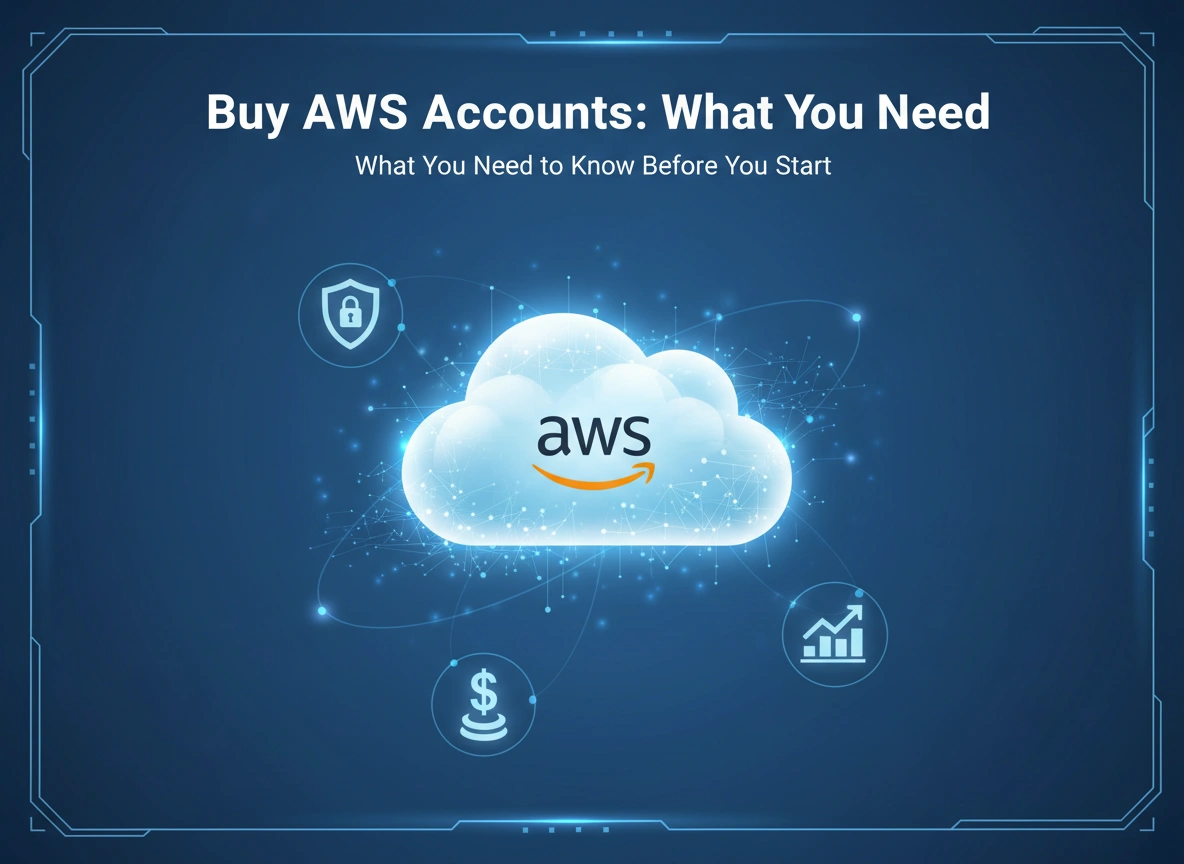
For developers and businesses, access to AWS is not just a luxury; it is often a necessity. However, getting started isn’t always straightforward. The sign-up process can be rigorous, requiring credit card verification, phone number validation, and sometimes even identity checks. Because of these hurdles, a secondary market has emerged where individuals and businesses look to “buy AWS accounts” rather than creating them from scratch.
This practice, while common in certain circles, is fraught with complexity. It sits in a grey area that balances convenience against significant security and compliance risks. Before you consider purchasing an AWS account from a third-party vendor, you must understand exactly what you are getting into. This guide explores the motivations, the perilous risks, and the safer alternatives you should consider.
Why Do People Buy AWS Accounts?
The concept of buying an account that is free to create might seem counterintuitive. Why pay for something you can register for yourself? Several driving factors push users toward this grey market.
Bypassing Geographic and Payment Restrictions
AWS has strict requirements for payment methods. They typically require a credit card or debit card from a supported bank. In some regions, local banking regulations or lack of access to international credit cards make it impossible for legitimate developers to sign up. Buying a pre-verified account allows these users to access the platform.
Accessing Promotional Credits
AWS often provides promotional credits to startups, students, or through specific events. These credits can be worth thousands of dollars. A secondary market exists where accounts loaded with these credits are sold for a fraction of their value. For a bootstrapped startup, paying $500 for an account with $5,000 in credits looks like a smart financial move, despite the risks.
Avoiding Verification Hurdles
The verification process can be triggered at any time. AWS may suspend an account immediately after creation if they suspect unusual activity, demanding utility bills or business licenses to reinstate it. Users who have been previously banned or who want to remain anonymous often buy accounts to bypass these checks.
Immediate Scalability and Higher Limits
New AWS accounts often come with “soft limits” on resources. For example, you might only be able to launch a certain number of EC2 instances. Older, aged accounts often have these limits raised or have a “trust score” that allows for faster scaling without triggering fraud detection algorithms.
The Risks and Challenges: A Deep Dive
While the reasons for buying an account are practical, the dangers are substantial. When you buy an AWS account, you are effectively taking over a digital identity that you did not create.
Security Vulnerabilities
This is the most critical risk. When you purchase an account, the original creator (the seller) likely retains some method of recovery. They might have the original email address, the root access keys, or recovery phone numbers.
- The “Take-Back” Scam: A dishonest seller can wait until you have loaded the account with valuable data or credits and then recover the account, locking you out and stealing your assets.
- Hidden Backdoors: The account could have pre-configured IAM users or roles that allow the seller to monitor your activity or siphon off your resources for crypto mining.
Violation of AWS Service Terms
Buying and selling accounts is generally a violation of the AWS Customer Agreement. AWS operates on a “Know Your Customer” (KYC) basis. If their fraud detection systems link your bought account to a known seller farm or detect a sudden change in access patterns (like a login from a new country), they will suspend the account.
- Immediate Termination: You have no recourse if AWS bans a bought account. You cannot contact support and prove ownership because the account details (name, address, card) rarely match your own.
- Data Loss: If an account is terminated for fraud, you lose everything hosted on it instantly.
Financial Liability and Billing Fraud
Many sold accounts are created using stolen credit card details or hacked identities. If you use such an account, you are unknowingly participating in fraud.
- The “Chargeback” Risk: If the account was set up with a stolen card, the legitimate owner will eventually file a chargeback. AWS will immediately shut down the account, and you could potentially face legal scrutiny for using stolen financial instruments.
Ethical and Compliance Issues
For businesses, using a bought account is a compliance nightmare. You cannot pass a SOC 2 or ISO 27001 audit if your cloud infrastructure is hosted on an account registered to a stranger. It breaks the chain of custody and makes it impossible to guarantee data sovereignty.
Key Factors to Consider Before Purchasing
If you have weighed the risks and still decide to proceed—perhaps for a disposable testing environment—you must exercise extreme caution.
1. Account Verification Status
Ensure the account is fully verified. This usually means phone verification and payment method verification are complete. Ask for proof that the account has passed the initial “sandbox” phase where AWS closely monitors for fraud.
2. The Region and IP History
Ideally, you want an account created in a region that matches your own, or at least a major market like the US or EU. Accounts created in high-risk regions are more likely to be flagged. Ask the seller about the IP history; if the account has been accessed from ten different countries in a week, stay away.
3. Aging (Account Age)
“Aged” accounts are more valuable than fresh ones. An account that has been active for six months with a history of paid invoices is less likely to be suspended than an account created yesterday. AWS algorithms trust longevity.
4. Seller Reputation and Guarantee
Never buy from anonymous forums or unverified Telegram groups. Look for marketplaces that offer escrow services or replacement guarantees. If an account is banned within 24 hours of purchase (a common occurrence), does the seller offer a refund or a replacement?
5. Handover Process
How is the account delivered? You need full control. This includes:
- Root email access (and the password to that email).
- Console password.
- Removal of all previous payment methods.
- Verification that no other IAM users exist.
Safer Alternatives to Buying Accounts
For legitimate businesses and developers, the risks of the black market far outweigh the benefits. There are legitimate ways to overcome the hurdles of AWS access.
1. AWS Activate for Startups
If you are looking for credits, apply for AWS Activate. This program provides thousands of dollars in credits, technical support, and training to startups. You usually need to be associated with an accelerator or incubator, but there are “Founders” tiers available for bootstrapped companies too.
2. AWS Partner Network (APN)
Work with an AWS Partner. Managed Service Providers (MSPs) and resellers can create and manage accounts on your behalf. They handle the billing and the relationship with AWS. This is often the best route for companies in regions with difficult payment regulations.
3. AWS Organizations
If you need multiple accounts for segregation (e.g., dev, test, prod), do not buy them. Use AWS Organizations to create sub-accounts under a single master payer account. This is the standard, best-practice way to manage multiple environments.
4. Prepaid Cards and Virtual Banks
If your local credit card is rejected, explore modern fintech solutions. Many virtual banking services (like Payoneer, Wise, or local equivalents) offer virtual debit cards that are accepted by AWS.
5. Free Tier Utilization
Maximize the AWS Free Tier. It offers 750 hours of EC2 compute time per month for the first year, along with generous limits on storage and databases. This is sufficient for learning and small prototypes without spending a dime or buying risky accounts.
Conclusion
The market for buying AWS accounts exists because of real barriers to entry in the cloud ecosystem. Whether it is strict payment validations or the allure of cheap credits, the temptation is understandable. However, you must view this transaction with eyes wide open.
Buying an AWS account is effectively building your house on land you do not own. You face the constant threat of eviction (bans), theft (seller recovery), and legal complications (fraudulent billing). For a serious project, a production environment, or a legitimate business, it is a gamble you should not take.
The safest path is always legitimacy. Utilize programs like AWS Activate, work with certified partners, or persist through the verification process. The stability and security of your cloud infrastructure are worth far more than the short-term convenience of a purchased account.
Please visit the Official Website for more info.